
MEP maintenance for commercial buildings keeps electrical, mechanical and plumbing systems safe and compliant. Failure points and inspection frequency.
MEP maintenance for commercial buildings is the discipline that keeps a facility's core systems running — the mechanical, electrical, and plumbing infrastructure that everything else depends on. When these systems are maintained well, they are invisible. When they are neglected, they become the single largest source of unplanned downtime, safety risk, and emergency spend in the building. This guide covers what MEP maintenance involves, where these systems typically fail, how often they should be inspected, and the Egyptian regulatory context every facility manager should account for.
What MEP Maintenance for Commercial Buildings Covers
MEP stands for mechanical, electrical, and plumbing — the three engineering disciplines that together make a building habitable and operational. MEP maintenance for commercial buildings covers the servicing, inspection, and repair of all three.
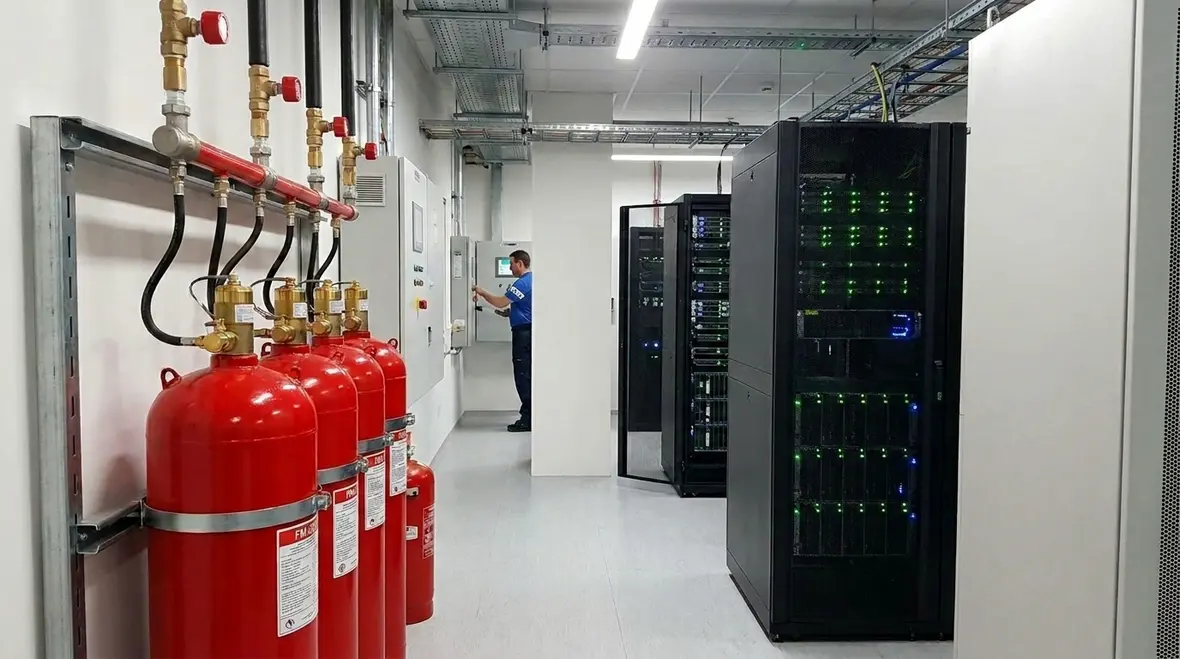
The mechanical scope covers HVAC, refrigeration, ventilation, and pumps. The electrical scope covers distribution boards, cabling, extra-low-voltage (ELV) systems, and standby power. The plumbing scope covers water supply, drainage, and connected systems. In most commercial buildings these systems are interdependent — a plumbing failure can threaten electrical safety, and an electrical fault can take mechanical plant offline — which is why they are managed together rather than in isolation.
This integrated view is the foundation of the wider preventive maintenance programme for any commercial facility.
Common MEP Failure Points
Effective electrical mechanical plumbing maintenance targets the points where these systems are known to fail. Experience across commercial buildings points to a consistent set:
- Electrical — loose or corroded connections generating heat, overloaded boards, and degraded insulation. These are the failures most associated with fire risk.
- Mechanical — HVAC compressor and refrigerant faults, blocked coils and filters, failed belts and bearings, and pump seal failures.
- Plumbing — leaks and blockages, water-pressure faults, and backflow issues that carry hygiene consequences in food and healthcare settings.
- Standby power — generators that fail to start on demand because they were never load-tested, and depleted batteries in ELV and life-safety systems.
Most of these MEP failure points share one characteristic: they are detectable well before they cause an outage. That is precisely what a planned inspection regime is designed to catch.
How Often Should MEP Systems Be Inspected?
Inspection frequency is driven by system type, criticality, and the operating environment. In Egypt, the climate raises the baseline: heat and dust accelerate wear on mechanical and electrical systems, pushing MEP inspection frequency above temperate-climate norms.
A practical reference for commercial buildings:
- Electrical distribution — periodic thermographic inspection to detect hot spots before failure, with connections checked and tightened on schedule
- HVAC and mechanical plant — quarterly servicing at minimum, more frequent through the summer peak
- Plumbing and water systems — scheduled inspection with attention to leaks, pressure, and water quality
- Standby power and ELV — monthly generator checks with load testing, and scheduled battery testing on life-safety systems
The exact schedule should come from the asset register and criticality ranking, not a generic calendar. The specialised nature of these systems is covered in depth in our complete guide to MEP systems management.
The Egyptian Regulatory Context
MEP maintenance for commercial buildings in Egypt is not only an operational matter — it is a compliance one. Several systems fall under regulatory oversight, and their maintenance records are part of demonstrating compliance.
Fire and life-safety systems must be maintained to Egyptian Civil Defence requirements, with inspection and testing documented. Electrical installations must meet safety standards, and in regulated sectors — healthcare, food, industrial — hygiene and safety authorities expect evidence that building systems are maintained. A documented electrical mechanical plumbing maintenance history is what turns a claim of compliance into proof of it.
Hard Services vs Soft Services: Where MEP Sits
In facilities management, services are commonly divided into hard services and soft services. Understanding where MEP maintenance for commercial buildings sits clarifies why it demands specialist attention.
Hard services are the technical, engineering-based services tied to the building's physical infrastructure — MEP maintenance, HVAC, fire systems, and structural upkeep. They require qualified technicians and carry direct safety and compliance consequences. Soft services are the people-facing, non-technical services — cleaning, security, catering, and landscaping.
MEP maintenance is the core of hard services. It cannot be delivered by general labour; it requires trained electrical, mechanical, and plumbing technicians working to defined standards. This is why treating electrical mechanical plumbing maintenance as interchangeable with soft services — or assigning it to unqualified staff — is a serious error. The technical nature of MEP work is precisely what makes qualified delivery non-negotiable.
What Should an MEP Maintenance Report Contain?
A defining feature of professional MEP maintenance for commercial buildings is documentation. If work is done but never recorded, the operator has no evidence it happened and no visibility into the building's condition. A proper maintenance report closes that gap.
Each MEP maintenance report should record:
- What was inspected and serviced — the specific assets and tasks completed
- Findings — the condition of each system, including any developing issues
- Actions taken — repairs and corrections made during the visit
- Recommendations — work required, prioritised by urgency
- Compliance evidence — confirmation that regulated systems were tested to requirement
These reports accumulate into the maintenance history that supports compliance, insurance, and capital planning. They also give the operator an early-warning system: a well-written report flags the developing fault before it becomes an outage. A provider who cannot produce clear MEP inspection reports is asking the client to take reliability on trust — which, for building infrastructure, is not acceptable.
Common Questions About MEP Maintenance
What does MEP stand for in facilities management?
MEP stands for mechanical, electrical, and plumbing — the three engineering disciplines that make a building operational. MEP maintenance for commercial buildings covers the servicing, inspection, and repair of all three, and in practice fire and life-safety systems are managed alongside them.How often should MEP systems be serviced in Egypt?
The frequency depends on the asset, its criticality, and the environment, but the Egyptian climate raises the baseline above temperate norms. Electrical distribution needs periodic thermographic inspection, HVAC and mechanical plant need at least quarterly servicing with more attention through summer, and standby power needs monthly load-tested checks.Can one provider handle all MEP maintenance?
Yes — and it is the stronger approach. Because these systems are interdependent, a single accountable partner covering mechanical, electrical, and plumbing closes the gaps that separate contractors leave at system interfaces, and gives the operator one escalation point and one maintenance record.Why Integrated MEP Maintenance Matters
Because MEP systems are interdependent, managing them through separate contractors creates gaps at exactly the points where systems connect. An integrated approach — one accountable partner across mechanical, electrical, and plumbing — closes those gaps and gives the operator a single escalation point and a single maintenance record.
Ayadi Integrated Services delivers MEP maintenance for commercial buildings as part of an integrated facilities management model across Egypt. Qualified technicians cover the full mechanical, electrical, and plumbing scope, working to documented schedules and coordinated with the wider preventive maintenance programme. As part of AMD Holding, Ayadi supports enterprise clients in sectors where MEP reliability is non-negotiable. To discuss MEP maintenance for your building, request a service assessment.