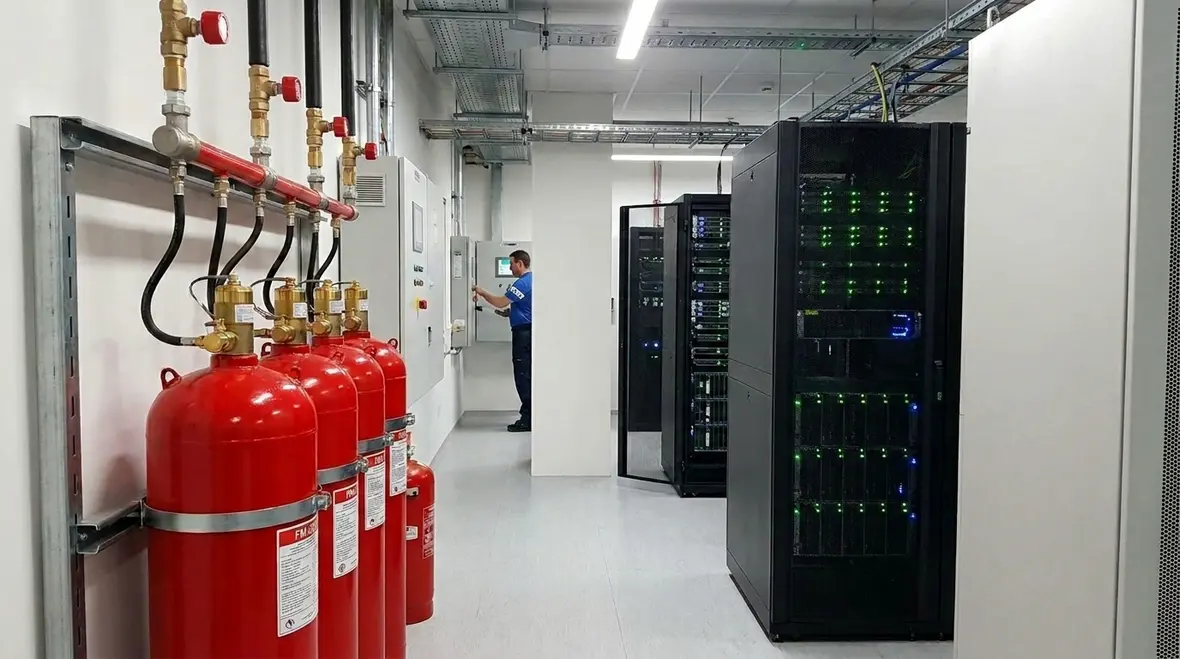

MEP systems management for commercial buildings in Egypt and MENA — electrical, HVAC, plumbing and fire systems covered in one practical guide.
MEP systems management is the discipline that keeps a commercial building operational, safe, and compliant — the coordinated management of the electrical, mechanical, and plumbing systems that every other function depends on. In Egypt and across the MENA region, where climate places additional strain on building services, effective MEP systems management is the difference between a building that runs reliably and one that lurches from failure to failure. This guide covers the four core system groups, how they are managed together, the Egyptian regulatory context, and why integrated management outperforms fragmented contracts.
What MEP Systems Management Covers
MEP stands for mechanical, electrical, and plumbing — and in practice, fire and life-safety systems are managed alongside them as a fourth critical group. MEP systems management is the coordinated planning, maintenance, and operation of all of these across a building's life.
The scope is broad because these systems are the building's infrastructure. HVAC management, power distribution, water systems, and fire protection each require specialist attention, and each interacts with the others. A failure in one frequently cascades into another. Managing them as a coordinated whole — rather than as separate services — is what distinguishes professional MEP systems management from piecemeal maintenance. This coordinated approach is the specialist core of a facility's wider preventive maintenance programme.
The Four Core System Groups
Electrical Systems
Electrical systems maintenance covers distribution boards, cabling, extra-low-voltage (ELV) systems, and standby power. The electrical system is the one most directly associated with fire risk, which makes its maintenance a safety priority. Core activities include thermographic inspection to detect hot spots before failure, connection tightening, load management, and standby-power testing. An untested generator that fails on demand is one of the most common — and most avoidable — MEP failures.
HVAC and Mechanical Systems
HVAC and mechanical plant — air conditioning, refrigeration, ventilation, and pumps — carry the heaviest maintenance load in the MENA climate. HVAC management in Egypt demands higher service frequency than temperate climates because heat and dust accelerate wear. The specific climate-driven requirements are covered in depth in our guide to HVAC maintenance for commercial facilities in MENA.
Plumbing and Water Systems
Plumbing covers water supply, drainage, and connected systems. In healthcare and food settings, water systems carry hygiene consequences, making their maintenance a safety matter as well as an operational one. Core activities include leak detection, pressure management, drainage maintenance, and — where relevant — water-quality management.
Fire and Life-Safety Systems
Fire detection, alarm, and suppression systems are the most heavily regulated group, and the one where deferred maintenance carries the gravest consequences. These systems must be maintained and tested to Egyptian Civil Defence requirements, with documentation, and are covered specifically in our guide to fire fighting systems maintenance.
Why Are MEP Systems Managed Together?
The case for integrated MEP systems management rests on how these systems interact. They are not independent — they are an interconnected infrastructure, and treating them as separate services creates gaps at exactly the points where they connect.
Consider the interactions: fire suppression depends on water systems and electrical power; HVAC depends on electrical distribution; standby power protects all critical systems during an outage. When separate contractors manage each system, no one owns the interactions between them. A capable MEP systems management approach manages the whole as a system, with one accountable partner able to see and manage the connections.
The Egyptian and MENA Regulatory Context
MEP systems management in Egypt is a compliance discipline as much as an operational one. Several system groups fall under regulatory oversight, and their maintenance records form part of demonstrating compliance.
Fire and life-safety systems must meet Egyptian Civil Defence requirements. Electrical installations must meet safety standards. In regulated sectors — healthcare, food, industrial — building-services maintenance is part of the compliance picture that authorities expect to see evidenced. A documented maintenance history across all MEP systems is what turns a claim of compliance into proof of it. The consequences of neglecting the fire-safety dimension specifically are examined in our fire fighting systems maintenance guide.
Integrated vs Fragmented MEP Management
The choice between integrated and fragmented MEP systems management has direct cost and risk consequences. Fragmented management — separate contractors for electrical, mechanical, plumbing, and fire — creates several problems: gaps at system interfaces, multiple escalation points, fragmented records, and no single owner of overall reliability.
Integrated MEP systems management resolves these. One partner manages all four system groups, sees the interactions, maintains a single record, and provides one point of accountability. The result is fewer failures at system interfaces, faster escalation, and a defensible maintenance history across the whole building infrastructure. It is also the foundation for the broader integrated FM model, where MEP maintenance connects to the wider building maintenance programme.
How Do You Build an MEP Maintenance Strategy?
Effective MEP systems management does not happen by default — it is built on a deliberate strategy. That strategy turns a collection of systems into a managed programme with clear priorities and defined outcomes.
Building an MEP maintenance strategy follows a logical sequence:
1. Asset inventory — identify and register every MEP asset across all four system groups 2. Criticality assessment — rank assets by the operational and safety consequence of failure 3. Maintenance planning — define tasks and frequencies for each asset, weighted by criticality 4. Resource allocation — ensure qualified technicians and specialist capability across all disciplines 5. Documentation and review — record all work and review the programme's effectiveness over time
This strategy ensures that the most critical systems — those where failure carries the gravest consequences, such as fire systems maintenance and standby power — receive priority attention, while all systems are maintained on a defined schedule. Without a strategy, MEP maintenance defaults to reacting to whatever fails next, which is the most expensive way to run building infrastructure. A strategic approach is what distinguishes managed HVAC management and electrical, plumbing, and fire maintenance from piecemeal repair.
Why Do Documentation and Compliance Records Matter So Much?
In MEP systems management, documentation is not administrative overhead — it is the evidence that the building's critical systems are maintained and compliant. Without it, an operator has claims but no proof.
Comprehensive MEP documentation serves several purposes at once. It provides the compliance evidence that regulators — including Egyptian Civil Defence for fire systems — expect to see. It supports insurance, where a documented maintenance history can be decisive in a claim. It informs capital planning, showing when an asset has genuinely reached end of life. And it provides operational visibility, turning condition reports into an early-warning system for developing faults.
The operator who maintains complete MEP records can demonstrate compliance, defend an insurance claim, plan capital rationally, and catch failures early. The operator who cannot has none of these — regardless of the actual condition of their systems. This is why an integrated approach, with a single documented record across all four system groups, is so much stronger than fragmented management with scattered or absent records. The connection to the broader building programme is set out in our guide to MEP maintenance for commercial buildings.
Common Questions About MEP Systems Management
What systems does MEP management cover?
MEP covers mechanical, electrical, and plumbing systems, and in practice fire and life-safety systems are managed alongside them as a fourth critical group. Together these are the building's core infrastructure — HVAC and mechanical plant, power distribution, water systems, and fire protection.Why manage MEP systems together rather than separately?
Because these systems are interdependent — fire suppression depends on water and power, HVAC depends on electrical distribution, and standby power protects all critical systems. When separate contractors manage each, no one owns the interactions between them. Integrated management sees and manages those connections under one accountable partner.What are the compliance requirements for MEP systems in Egypt?
Fire and life-safety systems must meet Egyptian Civil Defence requirements, and electrical installations must meet safety standards. In regulated sectors, building-services maintenance forms part of the compliance picture authorities expect to see evidenced through a documented maintenance history.The Integrated Approach
Ayadi Integrated Services delivers MEP systems management across Egypt as part of an integrated facilities management model — electrical, HVAC, plumbing, and fire systems managed together, by qualified technicians, to documented schedules, with the compliance records the Egyptian framework requires. Managing all four system groups under one accountable contract closes the gaps that fragmented management leaves open. As part of AMD Holding, Ayadi brings this discipline to enterprise clients in sectors where MEP reliability is non-negotiable. To discuss MEP systems management for your building, request a service assessment.