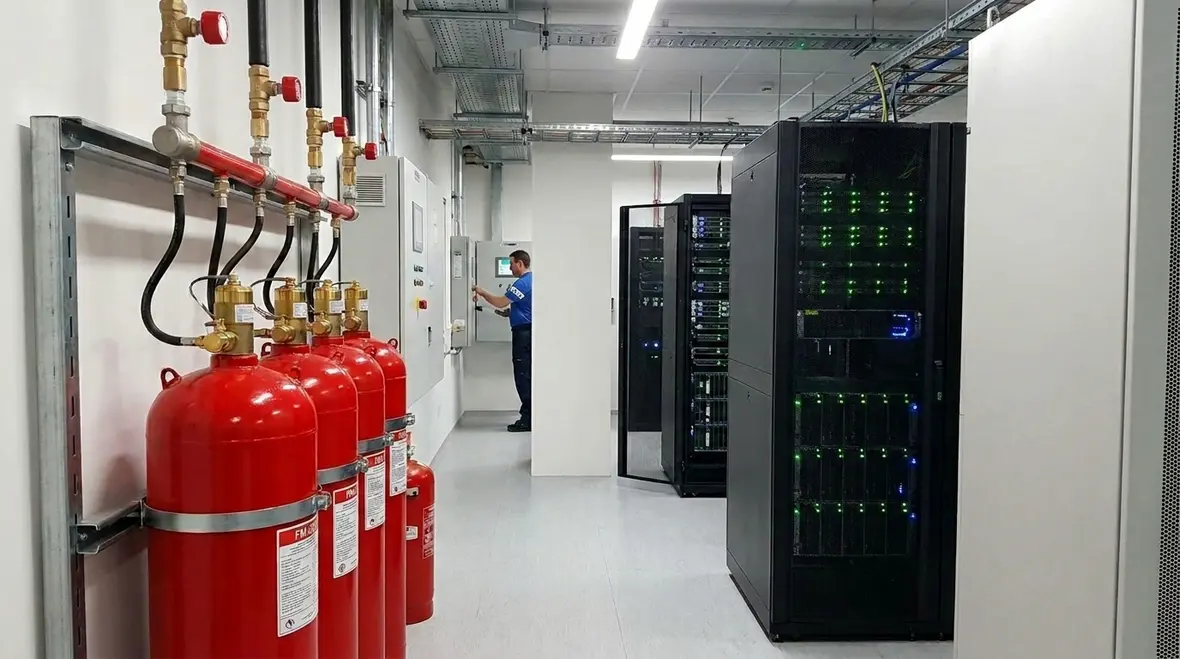

The main types of facility maintenance — emergency, reactive and preventive — explained for building owners evaluating FM partners in Egypt.
Understanding the types of facility maintenance is the starting point for any building owner evaluating a facilities management partner. The terms emergency maintenance, reactive maintenance, and preventive maintenance are often used loosely, yet they describe three fundamentally different models — with very different cost profiles and very different consequences for your operation. This guide explains the three tiers clearly, so you can assess what a provider is actually offering and where your current spend is going.
Why the Distinction Matters
Every maintenance riyal or pound you spend falls into one of these three tiers. The mix tells you how your facility is really being run. A building dominated by emergency and reactive work is being managed by its equipment; a building with a strong preventive core is being managed by its operator.
The problem is that many providers describe themselves as offering "maintenance" without specifying the model. Knowing the types of facility maintenance lets you ask the right question: what proportion of the work is planned, and what proportion is unplanned? That single ratio is one of the clearest indicators of whether a facility is under control.
Tier One: Emergency Maintenance
Emergency maintenance is the response to a failure that poses an immediate risk to safety, security, or critical operations. A burst water main flooding a server room, a total power failure in a hospital, a fire-system fault — these demand immediate intervention regardless of cost or schedule.
Emergency maintenance is unavoidable in any facility; no programme eliminates it entirely. But its frequency is a direct measure of programme health. A facility running frequent emergency callouts is not experiencing bad luck — it is experiencing the predictable result of deferred or absent planned maintenance. The goal is never to have zero capability for emergencies; it is to need them rarely.
The defining features of emergency maintenance:
- Unplanned and immediate — triggered by failure, not schedule
- Highest cost per intervention — premium labour, out-of-hours rates, expedited parts
- Operational disruption — the failure is already affecting the business
Tier Two: Reactive Maintenance
Reactive maintenance is repair carried out after a fault is identified, but where the failure is not an immediate emergency. A non-critical unit stops working and is repaired when convenient. It is often called "run to failure" — assets are used until they break, then fixed.
Reactive maintenance has a legitimate, narrow place: for low-cost, non-critical, easily replaced assets, running to failure can be the rational choice. The mistake is applying it by default across a whole facility. When reactive maintenance becomes the operating model rather than a deliberate choice for specific assets, costs rise and reliability falls. The full comparison of this model against planned servicing is set out in our complete guide to preventive maintenance.
Tier Three: Preventive Maintenance
Preventive maintenance is planned, scheduled servicing carried out before failure occurs. Assets are inspected, serviced, and corrected on a defined schedule based on their service specification and criticality.
This is the tier that changes a facility's economics. By intervening before failure, preventive maintenance removes most of the downtime, collateral damage, and premium-cost callouts that the other two tiers generate. It also produces something the reactive models cannot: a documented maintenance history that supports compliance, insurance, and capital planning.
The defining features:
- Planned and scheduled — driven by a calendar, not a breakdown
- Lowest total cost of ownership — highest predictability, least disruption
- Documented — every visit recorded, building a defensible history
How Should the Three Tiers Work Together?
The question is not which tier to use — it is what the balance should be. A well-run facility is built on a strong preventive core, applies reactive maintenance deliberately to a defined set of low-criticality assets, and retains genuine emergency capability for the rare failures no programme can predict.
When evaluating an FM partner, the types of facility maintenance they emphasise tell you their philosophy. A partner that leads with emergency response is selling firefighting. A partner that leads with a preventive programme — asset registers, schedules, documented history — is selling control. The difference shows up in your annual cost and your unplanned-downtime hours. If your current provider's mix looks wrong, the warning signs are set out in five signs your maintenance provider is costing you more.
How Do You Read Your Maintenance Mix?
The most useful thing a building owner can do with the types of facility maintenance is measure their own mix. The ratio of planned to unplanned work is a direct diagnostic of facility health, and it is straightforward to assess.
Start by categorising a period's maintenance activity into the three tiers. Then look at the proportions. A healthy operation shows preventive maintenance as the clear majority of activity, with reactive work confined to deliberately chosen low-criticality assets, and emergency work as a rare exception. An unhealthy operation shows the reverse — emergency and reactive work dominating, preventive maintenance minimal or absent.
If your mix is weighted toward unplanned work, that is not a staffing problem or a run of bad luck. It is the measurable signature of an absent preventive programme, and it is costing you in downtime and premium callouts you may never have totalled.
Questions to Ask a Provider About the Three Tiers
When evaluating an FM partner, the types of facility maintenance give you a set of precise questions that reveal how a provider actually operates:
- What proportion of your work is planned versus unplanned? A capable provider tracks this and can answer.
- How do you decide which assets run to failure? The answer should be a deliberate criticality assessment, not a default.
- What is your emergency response capability? Genuine capability matters, but it should be positioned as a backstop, not the core offer.
- How do you reduce emergency and reactive work over time? This reveals whether they see their role as prevention or firefighting.
The pattern in the answers tells you the provider's philosophy. A partner who leads with preventive discipline and treats emergency response as a backstop is managing your facility. One who leads with rapid response to breakdowns is selling you the symptom, not the cure — and, over time, the more expensive model.
Common Questions About the Types of Facility Maintenance
What is the difference between reactive and preventive maintenance?
Reactive maintenance repairs an asset after it fails; preventive maintenance services it on a schedule before it fails. Reactive appears cheaper because you only pay when something breaks, but it is usually more expensive once downtime, collateral damage, and premium callouts are counted.Is emergency maintenance the same as reactive maintenance?
No. Emergency maintenance responds to a failure posing an immediate risk to safety or critical operations, demanding instant intervention. Reactive maintenance addresses non-critical faults that can be repaired when convenient. The two differ in urgency, cost, and consequence.What is a healthy balance between the three tiers?
A well-run facility is built on a strong preventive core, applies reactive maintenance deliberately to defined low-criticality assets, and retains genuine emergency capability for rare, unpredictable failures. A facility dominated by emergency and reactive work signals an absent preventive programme.The Integrated Approach
Ayadi Integrated Services delivers all three types of facility maintenance under one accountable contract across Egypt — a preventive programme as the core, deliberate reactive maintenance where it is the right economic choice, and genuine emergency response when it is needed. Managing the full range through one partner means one escalation point, one maintenance record, and a single view of where your facility sits across the three tiers. As part of AMD Holding, Ayadi brings this discipline to enterprise clients in demanding sectors. To review how your maintenance spend is distributed, request a service assessment.